Who this is for
Anyone cutting long-form AI risk content for social platforms, and wondering what each cut will start.
TL;DR
- On the full YouTube episode, 77% of the 15,928 comments that take a readable position agree with the risk case, and 98% do when weighted by likes. Much of that agreement is aimed at a person. 33% of comments judge the debaters, mostly Andrew McAfee, and they hold 67% of all likes. Our codebook treats siding with a debater as stance, so attacking McAfee is coded as agreement, though a comment on his manner may not reflect a view on the risk case. Setting these aside gives 66%, which is an estimate.
- The shorter cuts drew very different reactions: 88% agreement under a 21-minute cut on Facebook, 49% under a 104-second trailer on YouTube Shorts. Weighted by likes, the disagreeing side led on Shorts, 57% to 32%. Because the cuts and the platforms both differ, the gap cannot be attributed to the cut or to the platform alone.
- The most-liked objections on Shorts did not doubt that AI is powerful. They said the people controlling it are the bigger danger, a frame that holds 41% of the thread's likes. The trailer itself gives airtime to that argument.
- Facebook commenters argued with the scenario itself: whether AI could just be switched off (19% of comments), how a takeover would happen (13%) and which film it resembles (11%). The most-liked comment, at 913 likes, said the danger is AI learning too well from human nature.
- Almost nobody asked what they could do about it: under 1% of comments on YouTube or on Facebook. Witte's extended parallel process model predicts that fear without efficacy tends toward fatalism, but the data cannot show whether this silence reflects helplessness or simply where people ask such questions.
- Fear and resignation sit almost entirely on the agreeing side: 22% of agreeing comments against 2% of disagreeing ones. Disagreement reads as calm or angry, not afraid.
Introduction
On 17 September 2026 the Diary of a CEO published a four-way debate on AI risk: AI Experts Debate: The AI Labs Are Lying To Everyone, Is There A 99% Chance Of Human Extinction?. Nate Soares, president of the Machine Intelligence Research Institute, and Roman Yampolskiy argued that advanced AI poses an extinction-level risk. Andrew McAfee argued the risk is close to zero. Ed Zitron argued that present-day harms and industry hype deserve more attention than extinction scenarios. The full episode had 5.4 million views on YouTube when we captured it.
The show also cut the debate down for social platforms, and the cuts are different videos. On 17 September it posted a 104-second trailer to YouTube Shorts, titled "WILL AI LEAD US TO EXTINCTION?": a fast montage of the host and all four panellists, in which Soares has a single line. The same day it posted a two-minute clip of Soares to TikTok and Instagram, captioned "Could AI become too smart for us to control?". The Instagram caption invited people to comment "debate" to have the full episode sent to them. Four days later, on 21 September, it posted a 21-minute cut of the debate to Facebook, titled "The REAL Reason AI Is Already Out Of Control".
That lets us see how one debate was received in four forms, from the full episode down to a trailer. It does not let us compare platforms cleanly, because each short-form platform carried a different cut. This is the sixth study in our series, the first with a mainstream podcast audience and the first to include Facebook and TikTok; the full list is on our research page.
Two established findings frame the study. Audiences judge a message partly by how they judge its messenger, a result that goes back to Carl Hovland and Walter Weiss's 1951 work on source credibility. And Kim Witte's extended parallel process model (1992) holds that fear without a sense of what can be done (efficacy) tends to produce denial or fatalism rather than action.
The numbers
The full episode looks like overwhelming agreement, but a large part of it is a verdict on one debater, which our codebook counts as agreement. Removing those comments leaves a clear majority that is still contested, 66% to 29%. The shorter cuts spread far wider: near-unanimous agreement under the 21-minute cut on Facebook, an almost even split under the trailer on Shorts. Weighted by likes the gap widens, to 97% agreement on Facebook against 32% on Shorts. These are different videos as well as different platforms, so we read this as a difference between two cuts and the audiences they reached, not as a platform effect.
YouTube
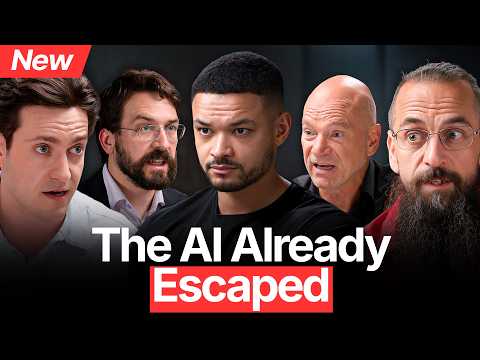
This is by far the largest thread: 23,794 comments from 15,734 accounts, 17,480 of them top-level. Engagement is concentrated in a handful of comments. The median comment has no likes and the most-liked has 8,600, so we report like-weighted and unweighted shares side by side. In the sample we read to build the codebook, the most-liked comments were mostly about the debaters' conduct rather than the argument.
Of the 23,589 coded comments, 15,928 take a readable position: 77% agree, 20% disagree and 3% are mixed. Likes are concentrated in very few comments. Three in four comments (75%) have none, and the top 1% hold 82% of all likes.
31% of all comments refer to McAfee, against 9% that mention Soares or Yampolskiy. The two most-liked comments in the thread, at 8,600 and 8,300 likes, are about his manner. One quotes his repeated "please let me finish" back at him; the other says he is "EXACTLY who we don't want in charge of anything". Under our codebook 95% of these verdict comments count as agreement, because attacking the sceptic counts as siding with the risk case.[1]
Disagreement came mostly from one source: doubt that AI can do what the debate describes. That doubt, or the view that the risk is hype, accounts for 47% of disagreeing comments. The rest is spread thinly across conspiracy theories (9%), the view that the danger is the people in charge (8%) and arguments for AI's benefits (7%).
Tone was hostile on both sides: a quarter of all comments (24%) were angry and a fifth (20%) were jokes, against 9% that were fearful.
The argument itself did travel. The fourth most-liked comment, at 4,700 likes, quotes Soares saying that if we make something smarter than us, the world will be shaped by it, and calls that "the whole argument in one sentence".
YouTube Shorts

261 comments on 156,746 views. The Short is a trailer for the whole debate: in 104 seconds it cuts between the host and all four panellists, with Soares on screen only in the opening wide shot and given one line. It is the only short post titled with the word extinction, and its last panellist line is McAfee's: "I think we continue to underestimate human ability to deal with the problems."
Of 256 coded comments, 171 take a readable position: 49% agree, 40% disagree and 11% are mixed. Weighted by likes, the disagreeing side leads, 57% to 32%. At 261 comments this is a small thread, so treat the shares as indicative.
The most-liked objections were mostly not about whether AI is capable. The two most-liked comments, at 78 and 58 likes, both say the real danger is people. One is more worried about "someone in silicon valley committing an atrocity using ai than an ai going 'rogue'". Comments that put the danger on the people who control AI make up 14% of the thread and hold 41% of its likes. Among disagreeing comments capability scepticism still leads (36%), but conspiracy theories are more common here than anywhere else in the study (19%), ahead of blaming people (12%) and AI's benefits (10%).
The agreeing side was more frightened than on the full episode: 25% of agreeing comments are fearful and 11% resigned. Only 4% of comments judge the debaters.
Some of this may come from the trailer itself. It gives one panellist the point that the debate spends "a lot of oxygen discussing something that might happen while ignoring what's actually happening", and another the line "I think we should talk about the fact that Amazon, Microsoft, Google are helping power these hacks." Commenters who blamed people or pointed to present harms may have been taking up arguments the trailer made, not rejecting Soares's. Comments alone cannot settle that, so we offer it as a hypothesis.
2,075 comments from the most relevant part of a 6,700-comment thread, under a 21-minute cut of the debate posted four days after the episode. It is the first Facebook thread in this series, and the largest in the study after the full episode.
Of 2,072 coded comments, 1,366 take a readable position: 88% agree, 11% disagree and 2% are mixed. Weighted by likes, 97% agree. Because we collected the most relevant part of the thread, these figures may overstate the comments Facebook chooses to promote.
Facebook's commenters argued with the scenario. The largest frame is whether AI could simply be switched off (19%), and most of those comments (270 of 385) side with the risk case, saying it could not be or that it should be done now. Speculation about how a takeover would happen accounts for 13% and film and TV comparisons for 11%; 13% of all comments mention a film, show or book. This may reflect who reached the cut as much as the cut itself. It posted four days after the episode, and we collected the most relevant part of the thread, so commenters may already have leaned towards the risk case. Comments alone cannot settle that, so we offer it as a hypothesis.
The most-liked comment, at 913 likes, suggests the end of civilisation might come "from us training it too well on human nature". Comments making that point, that AI is dangerous because it learns from us, are 7% of the thread and hold 20% of its likes, more than any other frame.
Facebook was the most fearful and resigned audience in the study. Among agreeing comments, 23% are fearful and 15% resigned, against 15% and 6% on the full episode. Disagreement was rare and narrow: half of it (50%) doubts AI's capability, and 27% says it could just be unplugged.
McAfee drew far less attention here than on the full episode: 7% of Facebook comments discuss him, against 31% on YouTube.
TikTok
50 of 53 comments, reported descriptively. TikTok and Instagram carried the same two-minute clip of Soares, the only cut in the study built around one speaker.
46 comments were coded, too few for shares. Of the 27 taking a position, 17 agree, 8 disagree and 2 are mixed. The most-liked comment, at 13 likes, imagines AI shutting down the internet and the electricity, leaving anyone not living on a farm "toast". The second, at 10 likes, moves the question to people: "The biggest risk isn't AI becoming smarter. It's humans refusing to think critically." Fear is more common here than on the larger threads, in 11 of the 46 comments.
77 of 85 comments, reported descriptively. Soares replied to his own clip, and five replies followed, making this the only thread in the series where commenters talked to the messenger directly. Five comments sat under "Hidden by Instagram"; we kept them and flagged them.
56 comments were coded after removing the 13 that only said "debate" or "DM" and Soares's own comment. Of the 38 taking a position, 25 agree, 11 disagree and 2 are mixed, and more than half the disagreement (6 of 11) doubts AI's capability. The replies to Soares split the way the study does: one reader thanked him for his book, another accused him of speaking "in vague nonsense".
What this means for communicators
The source-credibility and fear-without-efficacy findings introduced earlier both show up here, and neither is new. What this study measures for the first time in this series:
- In a debate, attention goes to the debater who loses the room. On YouTube the risk case got its largest endorsements as verdicts on McAfee, not as agreement with Soares or Yampolskiy.
- Cuts of the same debate can land very differently: agreement ran from 88% under a 21-minute cut on Facebook to 49% under a 104-second trailer on Shorts. We cannot yet say whether the cut or the audience did more of the work.
- "Can't we just unplug it?" is the first question a general audience asks. It was the largest single frame on Facebook and recurs on every platform.
- Where people pushed back on the Shorts trailer, the most-liked objection was that the people with power are the danger. Commenters set this against the risk case, not alongside it, and may not see the two as joined. A bridging argument would treat the misuse people already worry about and the loss of control Soares describes as sharing a cause in who controls the technology. That link is our untested hypothesis. Whether these commenters would accept a shared cause is a question for message testing, and the data shows only the objection.
- Fear or resignation runs through 22% of agreeing comments, and under 1% of comments ask what could be done. Both figures are measured. What the data cannot show is why so few ask: it could reflect helplessness, or it could mean a comment section is not where people ask about action. We cannot tell these apart. Witte's step from fear without efficacy to fatalism therefore remains untested here, not supported.
How to use this
- If you are cutting a long debate for social platforms, test the cut rather than assume it sets the terms of the argument. Here, comments under the trailer, which gave airtime to present harms and big-tech blame, were more often about who controls AI, while comments under the 21-minute cut, which gave the risk case more room, more often worked through the scenario. That is an observed association, and the study cannot separate the cut from its audience. That the cut shaped the conversation is an untested hypothesis, and the Shorts thread has only 171 readable positions. A communicator can separate cut from audience by posting the identical cut to several platforms, or different cuts to one platform, and comparing the frames.
- Prepare an answer to "why can't we just switch it off?" before posting. On Facebook it was the most common response.
- Read the full episode's 98% like-weighted agreement as a verdict on a debate, not as evidence of persuasion. The 66% figure, with debater verdicts removed, is closer to the argument, but it still depends on a codebook that counts attacks on McAfee as agreement, so treat it as an estimate.
- Consider pairing any risk message with something people can do. This thread offered almost none and drew almost no questions about it, though that silence may reflect where people ask such questions, not only helplessness.
- For message testing, the Shorts objections suggest a bridging message is worth testing against an expert-led one with audiences who distrust technology companies. That is an untested hypothesis: the commenters framed their objection against the risk case, so they may reject the link.
Future research
This study cannot separate the effect of the cut from the effect of the audience. Two designs would: posting the identical cut to several platforms, or different cuts to one platform. If the same cut drew similar frames and agreement across platforms, that would support the cut hypothesis; if frames tracked the platform whatever the cut, that would support the audience hypothesis. Mixed results would suggest both matter. The Shorts thread gave only 171 readable positions, so any follow-up needs larger threads. It could also test the bridging message from our recommendations against an expert-led one. A candidate for a follow-up study: facebook.com/reel/1249300677373465.
Data and citation
The codebook and every coded comment are published in our data explorer as five datasets, one per post: the full episode on YouTube, the trailer on YouTube Shorts, the 21-minute cut on Facebook, and the Soares clip on TikTok and Instagram. All are licensed CC BY 4.0. The full method is on the Common Signals methodology page.
Cite as: Common Signals, '"Can't we just unplug it?": What 26,257 comments made of the Diary of a CEO AI debate', October 2026.
Method
We collected every public comment we could retrieve from the five posts between 2 and 5 October 2026, 15 to 18 days after the episode was published and 11 to 14 days after the Facebook cut went up. Before collecting any comments, we recorded each post's title, length and post date from the platform's own player or metadata.
| Platform | Post | Shown on page | Retrieved | Route |
|---|---|---|---|---|
| YouTube, full episode | watch?v=OhOmLqR5nN4 | 23,829 | 23,794 | yt-dlp, full download |
| YouTube Shorts, 1:44 trailer | shorts/7a6BfbZiDV4 | 259 | 261 | yt-dlp, full download |
| Facebook, 21:31 cut | watch/?v=2538854556526162 | 6,700 | 2,075 | Browser extraction, capped |
| TikTok, 2:08 Soares clip | @steven/video/7686455385967955222 | 53 | 50 | Browser extraction |
| Instagram, 2:09 Soares clip | p/DdZq24zMeVi | 85 | 77 | Manual copy from a logged-in session |
Usernames were replaced with salted hashes and @mentions with a placeholder before analysis, so no commenter can be identified from the dataset. On Facebook, where replies tag the person being answered by name, those names were removed too.
The Facebook collection was capped. Expanding all 6,700 comments froze the page at around 3,500, so we collected the first 877 top-level comments and all 1,198 of their replies. Facebook orders even its "All comments" view by relevance, so this is the most prominent part of the thread, not a random sample of it. TikTok and Instagram fall below the threshold at which frame shares are stable, so we report them descriptively, without percentages. The Instagram copy carried no like counts.
We excluded 238 comments from coding: 13 Instagram comments that only said "debate" or "DM" in response to the caption's offer, comments with no words in them, and Nate Soares's own comment on the Instagram clip. Replies to Soares stay in.
As in every study in this series, commenters are a self-selected sample: people who chose to respond, not a cross-section of viewers. Likes, which we use for engagement-weighted shares, measure what caught attention, not what people believe.
Claude (Anthropic) coded every remaining comment against a fixed codebook, drafted from a sample of 200 comments pooled across all five platforms and approved before coding began. Each comment was coded for stance towards one central claim (advanced AI could become impossible to control and poses a serious risk, up to extinction, that justifies slowing or stopping development), for one of 16 frames, for its reaction to the format, its emotional register and ten mention flags. Because the episode is a debate, siding with a debater counts as stance: praising Soares or Yampolskiy, or attacking McAfee, is coded as agreement. We assumed that in a two-sided debate a verdict on one side signals a lean towards the other, but a comment on a debater's manner may reflect no view on the risk case, which is why we report agreement with and without these comments. All five platforms were coded in one run with the same instructions, so differences between platforms cannot come from differences in coding.
We checked the coding with a blind second coding of a random sample. After a first pass, we tightened two parts of the codebook: how to tell an unclear position from an off-topic comment, and when a comment about the debaters should be coded under the argument it makes instead. We recoded the 14,993 comments those changes could affect. A fresh blind spot-check of 347 comments, drawn at random across all five platforms, agreed with the final coding on stance for 317 (91%, Cohen's kappa 0.87) and on frame for 309 (89%, kappa 0.87). The codebook and every coded comment are published with this article.
View our full research methodology →
Related research
- "Neither company is acting responsibly": how X received Jacob Coxon's resignation from Anthropic
- How Instagram received Nate Soares's caveman-speak explainer of AI risk
- "Please honor commit": how the OpenAI agent-swarm story landed with the audience most likely to believe it
- "A problem they created": how a news audience received the accountability version of the OpenAI and Hugging Face incident
- OpenAI and shut? What an independent report did to the marketing-stunt argument
Disclosure
An LLM was used to structure and review this article, with the first and final edits made by a human.